
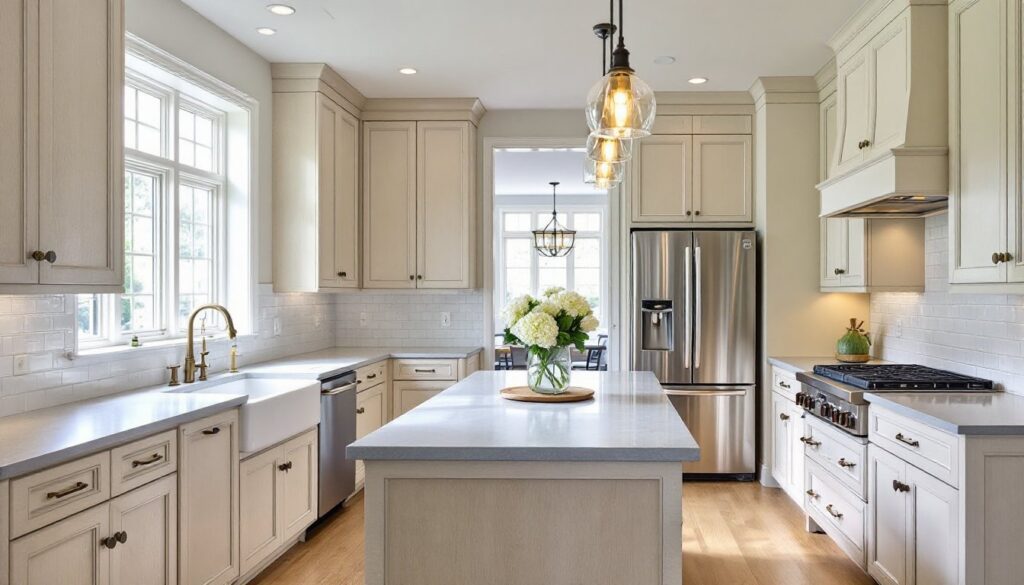

Bethesda’s housing market reflects one of the highest property values in Montgomery County, which means homeowners have a strong incentive to protect and enhance their investment through strategic remodeling. Whether it’s a cramped galley kitchen from the 1980s or a single bathroom shared by four people, renovation projects offer more than aesthetic appeal, they address functional shortfalls and adapt homes to modern living standards. This guide walks through the planning, permitting, budgeting, and execution phases specific to Bethesda, where local zoning regulations and architectural review boards add layers of complexity that neighboring jurisdictions may not impose.
Table of Contents
ToggleKey Takeaways
- Home remodeling in Bethesda, MD protects high-value investments while adapting older homes to modern standards, especially important given local property values and the cost of relocation.
- Kitchen renovations consume 25–35% of remodeling budgets and typically require structural permits, electrical upgrades (240V circuits, 200-amp panels), and modern finishes like quartz counters and LED lighting systems.
- Bethesda homeowners should budget $60,000–$100,000 for mid-range kitchen remodels and $25,000+ for bathroom upgrades, plus a 15–20% contingency for structural discoveries and code compliance.
- Montgomery County permits require 2–4 weeks for plan review, making it critical to obtain proper MHIC licenses and insurance before any work begins to avoid fines and future sale complications.
- Hiring a Certified Kitchen and Bath Designer before contractor engagement reduces mid-project changes and ensures all bids match identical scopes in Bethesda’s competitive remodeling market.
- Design trends for 2026 emphasize natural materials, warm neutrals, integrated appliances, and universal accessibility features like curbless showers and comfort-height toilets that blend functionality with modern aesthetics.
Why Bethesda Homeowners Are Investing in Remodeling Projects
Bethesda’s real estate climate drives renovation decisions in ways that differ from suburban markets with lower entry costs. Homes here, many built between the 1940s and 1970s, carry strong bones but outdated layouts. Selling and relocating often means accepting closing costs, agent commissions, and the uncertainty of finding a comparable neighborhood with top-rated schools and Metro access.
Renovating instead allows homeowners to customize floor plans, upgrade mechanical systems, and add square footage without sacrificing location. Energy efficiency upgrades like spray foam insulation, heat pump HVAC systems, and Low-E windows also deliver measurable utility savings, a consideration that matters when heating and cooling a 2,500+ square-foot colonial.
Another factor: Bethesda’s competitive resale market rewards well-executed remodels. Kitchens and bathrooms recoup a significant portion of their cost at sale, especially when finishes align with buyer expectations in this price bracket. Homeowners planning to age in place prioritize accessibility features, curbless showers, wider doorways, and first-floor primary suites, that aren’t standard in older construction.
Most Popular Home Remodeling Projects in Bethesda
Kitchen Renovations
Kitchens anchor Bethesda remodels, often consuming 25–35% of total renovation budgets. The typical project involves removing a wall between the kitchen and dining room to create an open-concept layout, a structural change that requires a load-bearing beam installation and permits from Montgomery County’s Department of Permitting Services (DPS).
Cabinet selection splits between custom face-frame construction (for traditional colonials) and frameless Euro-style boxes (for contemporary builds). Expect 3/4-inch plywood boxes as the baseline for durability: particleboard won’t hold up under the humidity swings common in this region. Countertop choices lean toward quartz composites (Caesarstone, Cambria) because they resist etching better than marble and require no sealing, unlike granite.
Appliance packages in Bethesda kitchens frequently include panel-ready refrigerators, induction cooktops, and wall ovens with convection. Plan for a 240V circuit for induction ranges, and verify your electrical panel has capacity, many older homes run 100-amp service, which may need an upgrade to 200 amps to support modern loads.
Lighting deserves its own line item. Recessed LED downlights (4-inch or 6-inch housings) provide general illumination, but under-cabinet LED strips and pendant fixtures over islands improve task visibility and add layering. Dimmer switches should be LED-compatible: older dimmers cause flickering and buzzing with modern fixtures.
Bathroom Upgrades
Bathroom remodels in Bethesda fall into two camps: full gut jobs that reconfigure plumbing and enlarge footprints, and cosmetic refreshes that swap finishes without moving fixtures. The former requires permits and often reveals hidden issues, galvanized steel supply lines, outdated cast-iron drain stacks, or subfloor rot around the toilet flange.
Tile work drives much of the visual impact. 12×24-inch porcelain planks in a running bond pattern dominate floor installations, while shower walls see subway tiles, large-format slabs, or hexagonal mosaics. Waterproofing protocol matters: apply a sheet membrane (Schluter Kerdi, RedGard) over cement backer board, lapping seams and corners per manufacturer specs. Skipping this step invites water intrusion and mold, especially around niches and curbs.
Vanity heights have shifted from the old 30-inch standard to 34–36 inches, aligning with kitchen counter ergonomics. Freestanding tubs make statements but eat floor space, confirm rough-in measurements before ordering, since many older bathrooms can’t accommodate a 60-inch or 67-inch soaking tub without expanding into an adjacent closet.
Ventilation codes require an exhaust fan rated for the room’s cubic footage, typically 50–80 CFM for a standard bathroom. Duct runs should terminate outside, not into the attic, and use rigid metal duct instead of flex to minimize resistance and lint buildup.
Planning Your Bethesda Remodeling Project: Budget, Permits, and Timeline
Budgeting in Bethesda requires adjusting national averages upward. Labor rates for licensed electricians, plumbers, and carpenters run higher than surrounding counties, and material delivery fees reflect metro-area logistics. A mid-range kitchen remodel might land between $60,000 and $100,000, while primary bathroom overhauls start around $25,000 and climb quickly with custom tile and high-end fixtures. Realistic cost estimates from HomeAdvisor and similar platforms offer useful baselines, but always add a 15–20% contingency for unforeseen structural repairs or code upgrades.
Permitting through Montgomery County DPS applies to most structural, electrical, and plumbing work. Expect plan reviews to take two to four weeks, longer if the project falls within a historic district or requires Board of Appeals variance for setbacks or height. Skipping permits risks fines and complicates future sales, title companies and buyers’ inspectors flag unpermitted work.
Timelines vary by scope. A kitchen remodel typically spans 8 to 12 weeks from demolition to final walkthrough, assuming no supply-chain delays on cabinets or appliances. Bathroom projects run 4 to 6 weeks for a single room. Whole-home renovations, adding a second story, finishing a basement, or reconfiguring the main floor, stretch into four to six months or more, particularly if structural engineering and HVAC load calculations are required.
Material lead times deserve attention. Custom cabinetry can take 10 to 14 weeks from order to delivery, and tile or stone slabs may need several weeks if sourced from specialty suppliers. Order long-lead items early and coordinate delivery with your contractor’s schedule to avoid storage fees or damaged materials sitting on-site.
Finding the Right Remodeling Professionals in Bethesda
Bethesda’s contractor pool includes established firms with decades of local projects and newer operations competing on price. Start by verifying Maryland Home Improvement Commission (MHIC) licenses, this isn’t optional. Unlicensed contractors can’t pull permits, and homeowners inherit liability for worksite injuries if the contractor lacks proper insurance.
Request certificates of insurance showing both general liability and workers’ compensation coverage. Check expiration dates and confirm the policy covers the project value. A contractor balking at this request is a red flag.
References matter, but go beyond the provided list. Search Angi for reviews, and ask neighbors who’ve completed similar projects. Bethesda’s tight-knit neighborhoods mean word travels fast, both good and bad.
Contracts should itemize scope, payment schedules, material allowances, and change-order procedures. Avoid contractors demanding large upfront deposits: Maryland law caps initial payments at one-third of the contract price. Staged payments tied to completion milestones (demolition complete, rough inspections passed, final walkthrough) protect both parties.
For design-intensive projects, kitchens with custom cabinetry, bathrooms with complex tile layouts, consider hiring a Certified Kitchen and Bath Designer (CKBD) or an interior designer before engaging a contractor. Design fees range from $100 to $200 per hour or a flat percentage of construction costs, but a detailed plan reduces costly mid-project changes and ensures contractors bid on identical scopes.
Bethesda Design Trends and Architectural Considerations for 2026
Bethesda’s architectural fabric blends colonial revivals, mid-century moderns, and contemporary builds, so design choices should respect the home’s bones. Forcing a sleek minimalist kitchen into a 1950s colonial with original moldings creates visual tension: instead, lean into transitional styles that bridge traditional proportions with modern finishes, shaker cabinets, unlacquered brass hardware, and neutral palettes.
Natural materials dominate 2026 trends: white oak flooring, quartersawn or rift-cut for stability: soapstone or honed granite counters that patina over time: and matte black or aged bronze plumbing fixtures that avoid the stark contrast of polished chrome. Homeowners are also embracing integrated appliances, panel-ready dishwashers and refrigerators that blend into cabinetry rather than announcing themselves.
Color palettes skew toward warm neutrals, greiges, taupes, soft whites with cream undertones, that photograph well and appeal to broad buyer demographics. Accent colors appear in removable elements like tile backsplashes or window treatments rather than permanent cabinetry.
Accessibility features no longer signal institutional design. Curbless showers with linear drains, comfort-height toilets (17–19 inches), and lever-style door hardware fit seamlessly into contemporary bathrooms while future-proofing the space. Wide doorways (36 inches minimum) and open floor plans accommodate aging in place without sacrificing aesthetics.
Sustainability influences material selection and system upgrades. Heat pump water heaters, Energy Star-rated windows, and spray foam insulation in attics and crawl spaces reduce energy loads and may qualify for federal tax credits or utility rebates. Researching platforms like Houzz helps homeowners visualize how these choices come together in completed projects.
Landscaping and outdoor living spaces increasingly tie into whole-home remodels. Adding a composite deck (Trex, Azek) with built-in lighting, a covered patio with a tongue-and-groove cedar ceiling, or upgrading to low-voltage LED landscape lighting extends usable square footage and enhances curb appeal, critical in a market where first impressions drive showings and offers.