
Roaches aren’t just creepy, they’re resilient, fast-breeding pests that can contaminate food, trigger allergies, and undermine your peace of mind. Whether you’re dealing with a full-blown infestation or spotted a single scout scuttling under the sink, tackling the problem fast is essential. Home Depot stocks a wide range of roach control products, from fast-acting sprays to slow-release baits, giving homeowners the tools to reclaim their space without calling an exterminator for every sighting. This guide breaks down what’s available, how to choose the right product for your situation, and how to use it safely and effectively.
Table of Contents
ToggleKey Takeaways
- Home Depot roach killer products range from fast-acting sprays to slow-release gel baits, offering homeowners multiple options to tackle infestations of any severity.
- Gel baits like Advion and Combat Max are considered the gold standard for long-term roach control because they spread poison throughout the colony via secondary poisoning.
- Combining gel baits with residual sprays around entry points is the most effective strategy for moderate to heavy infestations and different roach species.
- Proper placement of bait in 12–18 inch intervals along baseboards, under sinks, and behind appliances, followed by weekly monitoring, is essential for breaking the breeding cycle over 2–3 months.
- Safety precautions including PPE, proper ventilation, secure storage away from children and pets, and following label directions exactly must always accompany roach killer use.
- If a DIY roach killer approach fails after consistent application, structural issues or multi-unit housing problems likely require professional pest control intervention.
Why Home Depot Is Your Go-To Source for Roach Control Products
Home Depot offers more than convenience, it’s a one-stop shop that combines variety, accessibility, and expert support. Unlike grocery stores with limited shelf space for pest control, Home Depot dedicates entire aisles to professional-grade and consumer-friendly options.
Selection breadth is a major advantage. You’ll find everything from aerosol sprays and gel baits to bait stations, granular treatments, and insect growth regulators (IGRs). Brands like Combat, Hot Shot, Raid, Ortho, and Advion are readily stocked, often in multiple formulations to suit different use cases, crack-and-crevice treatment, outdoor perimeter defense, or indoor bait placement.
In-store availability means you can handle a roach problem the same day you spot it. No waiting for shipping when you’ve got German cockroaches breeding behind the dishwasher. Many locations also staff knowledgeable associates who can point you toward the right product based on the species and severity of your infestation.
Price transparency and bulk options make Home Depot competitive. Multi-packs of bait stations or larger spray cans often come at better per-unit pricing than what you’d find at big-box retailers. Plus, Home Depot’s return policy covers pest control products if they’re unopened, giving you flexibility if you overbuy or choose the wrong type.
Top-Rated Roach Killer Products Available at Home Depot
Spray Solutions for Immediate Roach Elimination
Aerosol sprays deliver fast knockdown when you need to kill visible roaches on contact. These are ideal for spot treatments, think behind appliances, along baseboards, or in garage corners where you’ve seen activity.
Ortho Home Defense Insect Killer is a popular choice. It comes in a 1.1-gallon continuous spray bottle with a wand applicator, making it easy to treat baseboards and entry points without bending over. The formula creates a barrier that kills roaches on contact and provides residual protection for up to 12 months indoors. It’s odorless once dry and safe for use around kids and pets after the treated surface dries, though you’ll want to keep them out of the area during application.
Raid Max Ant & Roach Killer is a budget-friendly aerosol that works well for quick kills. The formula contains cypermethrin and imiprothrin, fast-acting pyrethroids that disrupt the roach’s nervous system. It’s effective but leaves a noticeable chemical smell, so proper ventilation is a must.
For crack-and-crevice work, Bengal Gold Roach Spray uses a dry formula that won’t stain and can be applied into wall voids, under sinks, and behind outlets (with the power off). It includes an IGR to disrupt the roach lifecycle, preventing nymphs from reaching adulthood.
Gel Baits and Bait Stations for Long-Term Control
Gel baits are the gold standard for long-term roach control. They work by attracting roaches to a food-based poison, which they consume and carry back to the nest, killing other roaches through secondary poisoning.
Advion Cockroach Gel Bait is the professional’s choice and widely regarded as one of the best roach killers on the market. It contains indoxacarb, a non-repellent active ingredient that roaches can’t detect. Apply pea-sized dots in areas with high activity, under sinks, behind the fridge, along cabinet edges. One tube covers about 60 placements, and you’ll start seeing dead roaches within 24-48 hours. Reapply every few months or when placements dry out.
Combat Max Roach Killing Gel is a solid consumer-grade alternative. It’s pre-loaded in a syringe applicator and uses fipronil, another slow-acting poison that spreads through the colony. It’s effective against German, American, and Oriental cockroaches.
Bait stations offer a cleaner, child-resistant option. Hot Shot Ultra Liquid Roach Bait stations use a liquid formula that attracts roaches into a small plastic housing. The roaches feed and return to the nest, spreading the poison. These work well in kitchens, bathrooms, and utility rooms. Place them near water sources and along walls where roaches travel, they prefer edges over open floor space.
Terro T500 Multi-Surface Roach Baits come with adhesive strips so you can mount them vertically on walls or inside cabinets. The stations remain effective for up to three months and are tamper-resistant, making them safer in homes with curious pets or toddlers.
How to Choose the Best Roach Killer for Your Home
Choosing the right roach killer depends on species, infestation size, and application environment. Not all products work equally well in every situation.
For light infestations or prevention, bait stations and gel baits are your best bet. They target roaches where they hide and breed without filling your home with chemical spray. If you’ve seen one or two roaches and want to prevent a larger problem, start here.
For moderate to heavy infestations, combine gel baits with a residual spray. Use the spray to create a barrier around entry points, door thresholds, window frames, pipe penetrations, and apply gel in high-traffic roach zones. This dual approach hits both wandering roaches and the colony.
For outdoor-to-indoor migration, consider a granular perimeter treatment like Ortho Home Defense Insect Killer Granules. These create a chemical barrier around your home’s foundation, killing roaches before they find a way inside. Apply with a broadcast spreader and water in lightly.
Species matters. German cockroaches are small, prolific breeders that thrive indoors, especially in kitchens. They respond well to gel baits. American cockroaches (often called “palmetto bugs” in the South) are larger, prefer basements and crawl spaces, and may require both baits and spray treatments.
Safety and household factors also play a role. If you have young children or pets, prioritize enclosed bait stations or gel placements in areas they can’t reach, behind appliances, inside cabinets, or under sinks. Avoid fogging products, which disperse chemicals throughout the air and require you to vacate the home for hours.
Many home improvement enthusiasts prefer gel baits because they’re precise, low-odor, and don’t require extensive prep work or cleanup. Sprays are faster but demand more caution during application.
Step-by-Step Application Guide for Maximum Effectiveness
Proper application makes the difference between control and failure. Roaches are smart, they avoid treated areas if the product repels them or if you apply it incorrectly.
Step 1: Clean and prep the area. Roaches are drawn to food debris, grease, and moisture. Wipe down counters, sweep floors, and fix any leaky pipes. Remove competing food sources so roaches are more likely to consume the bait.
Step 2: Identify roach activity zones. Look for droppings (small dark specks), egg casings, and live roaches. Common hotspots include under sinks, behind refrigerators, inside cabinets, around garbage cans, and near water heaters. Roaches travel along edges, so focus on baseboards and corners.
Step 3: Apply gel bait strategically. Use a caulking gun or syringe applicator to place small dots (about the size of a pea) every 12 to 18 inches along baseboards, inside cabinets, and behind appliances. Don’t smear the gel, roaches prefer discrete placements. Avoid placing bait on freshly cleaned surfaces treated with bleach or ammonia, as these can repel roaches.
Step 4: Deploy bait stations. Place stations in areas where you’ve seen activity, ideally near water sources and along walls. Don’t put them in the middle of the floor, roaches hug walls as they move. Replace stations every three months or when empty.
Step 5: Apply spray to perimeters and entry points. Shake the can or bottle well. Apply a thin, continuous band along baseboards, door frames, window sills, and around pipes. For crack-and-crevice treatment, use a straw applicator to get product deep into gaps. Let treated surfaces dry completely before allowing kids or pets back into the area.
Step 6: Monitor and reapply. Check bait placements weekly. If they’re gone or dried out, reapply. Dead roaches are a good sign, it means the bait is working. Keep treating for at least two to three months to break the breeding cycle. Roach eggs are resistant to pesticides, so you need to kill newly hatched nymphs as they emerge.
If you’re dealing with a persistent infestation even though proper application, the problem may be structural, wall voids, under-slab plumbing, or neighboring units in multi-family housing. At that point, a licensed pest control professional may be necessary. Interior design trends won’t matter much if roaches keep crawling out from behind your backsplash.
Safety Tips When Using Roach Killers in Your Home
Roach killers are pesticides, and all pesticides carry some level of risk if misused. Follow label directions exactly and take common-sense precautions.
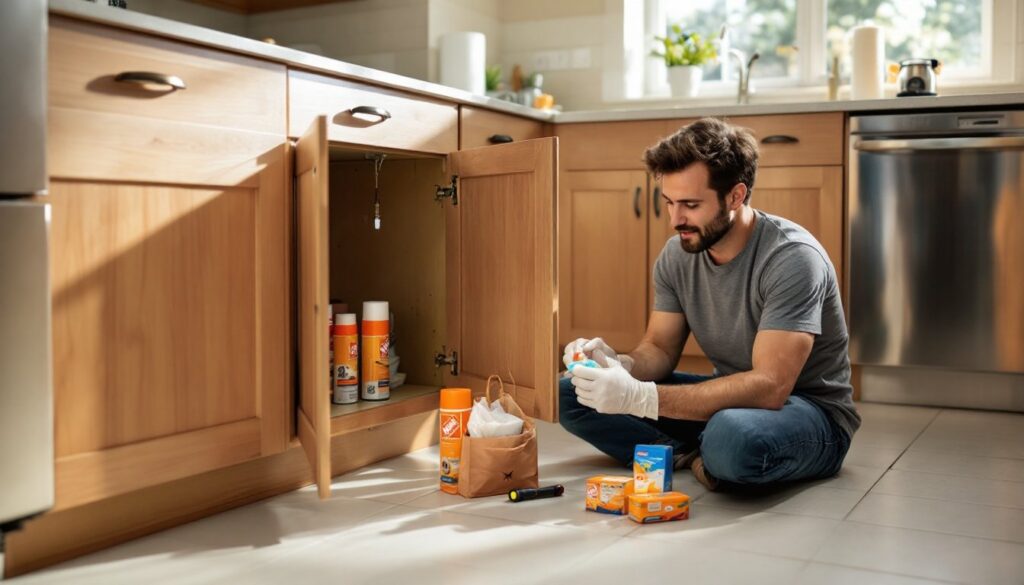
Wear appropriate PPE. When applying sprays, especially aerosols or concentrated formulas, use nitrile gloves and safety glasses. If you’re treating a crawl space or attic, a respirator with organic vapor cartridges (not just a dust mask) is a good idea.
Ventilate treated areas. Open windows and run fans during and after spray application. Most products are safe once dry, but the drying process releases volatile organic compounds (VOCs). Keep people and pets out of the room until surfaces are completely dry, usually 1-2 hours.
Store products safely. Keep all roach killers in their original containers, out of reach of children and pets. Garages and utility closets with locking doors are ideal. Never transfer pesticides into unmarked bottles.
Don’t contaminate food or food-prep surfaces. Avoid spraying directly on countertops, cutting boards, or inside pantries. If treating under a sink or inside a cabinet, remove food items first and wipe down surfaces after treatment.
Follow disposal instructions. Empty containers can usually go in the trash, but check your local regulations. Some municipalities require pesticide containers to be taken to a hazardous waste facility. Never pour leftover product down the drain or into storm sewers.
Watch for allergic reactions or sensitivities. Some people react to pyrethroids or other active ingredients. If you experience headaches, dizziness, or respiratory irritation after application, leave the area and seek fresh air. If symptoms persist, contact a medical professional.
Keep an eye on pets. Cats are particularly sensitive to pyrethroids. If you’re treating areas your cat frequents, consider boarding them for the day or keeping them in an untreated room until everything dries. Dogs are less sensitive but can still get sick if they lick freshly sprayed surfaces.
Roach control is a process, not a one-time event. Combining the right products with consistent application and basic sanitation will get you there. And if the problem’s beyond DIY scope, extensive wall infestations, multi-unit buildings, or signs of structural damage, call a pro. Some battles are worth outsourcing.