
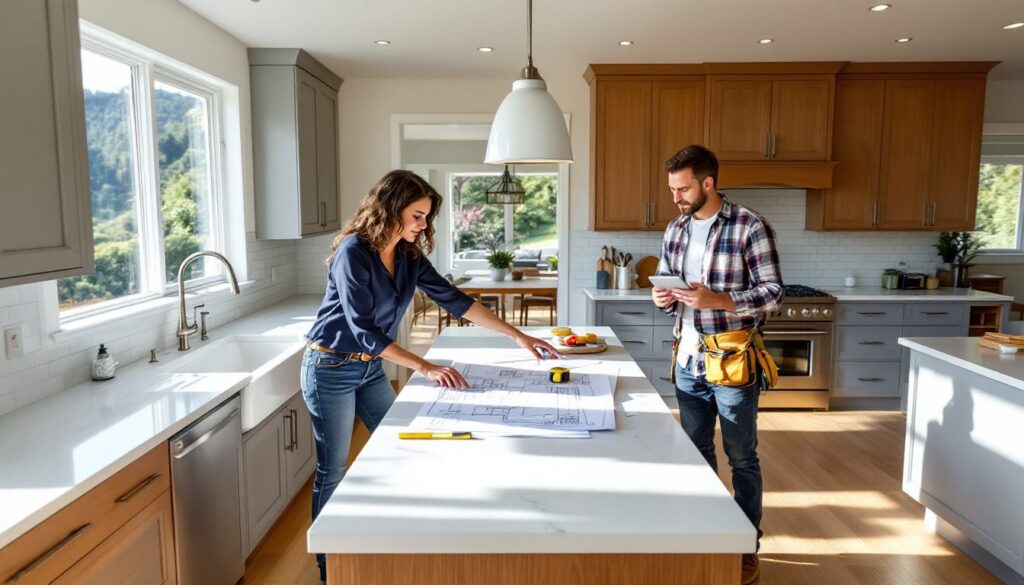

Saratoga’s real estate market continues to command some of the highest home values in the region, making strategic remodeling projects not just aesthetic choices but solid financial moves. Whether planning a kitchen overhaul or a bathroom refresh, homeowners face unique considerations, from navigating local permitting requirements to budgeting for Silicon Valley-area labor costs. This guide walks through the most impactful remodeling projects in Saratoga, what they cost, how to stay compliant with local regulations, and how to find contractors who understand the area’s expectations for quality and finish work.
Table of Contents
ToggleKey Takeaways
- Home remodeling in Saratoga is a smart financial investment, as strategic kitchen and bathroom upgrades in this $3M+ median home value market often outpace the costs of selling and relocating.
- Kitchen renovations deliver the highest ROI in Saratoga, with mid-range projects costing $80,000–$150,000 and high-end remodels exceeding $250,000, while energy-efficient upgrades can cut utility bills by 20-30%.
- Saratoga’s permitting process is mandatory for structural, electrical, plumbing, or mechanical changes; costs range from $200 to $5,000+, and design review can add 4–8 weeks for exterior modifications.
- Labor and material costs in Saratoga run 20-30% higher than national averages, with general contractors charging $150–$250 per hour and skilled trades at $120–$180 per hour.
- Always verify contractor licenses through CSLB, obtain at least three detailed bids, request references with similar scope, and follow California draw schedules (10-15% deposit, 25-30% at key stages) to protect your investment.
- Plan for 8–12 weeks on bathroom remodels and 3–5 months on full kitchen renovations in Saratoga, accounting for permitting, design review, and trade scheduling; include a 15-20% contingency for concealed conditions like asbestos or outdated infrastructure.
Why Saratoga Homeowners Are Investing in Remodeling Projects
Saratoga’s median home prices hover well above $3 million, with many properties built in the 1960s and 70s. Aging infrastructure, outdated layouts, and worn finishes drive much of the remodeling activity. Rather than moving and absorbing transaction costs that can exceed $100,000, many homeowners choose to reinvest in their current properties.
Energy efficiency is another major motivator. Older homes with single-pane windows, insufficient insulation, and aging HVAC systems can cost thousands annually in wasted energy. Modern remodels often include dual-pane or triple-pane windows, upgraded insulation to R-38 or higher in attics, and HVAC zoning systems that cut utility bills by 20-30%.
The competitive resale market also pushes homeowners to keep pace with neighborhood standards. In neighborhoods like Saratoga Hills or Monte Sereno borders, buyers expect chef-grade kitchens, spa-like bathrooms, and open floor plans. Homes that haven’t been updated in 15+ years often sit longer on the market or sell below comps.
Finally, many residents plan to age in place. This means wider doorways (36″ clear opening instead of standard 32″), zero-threshold showers, reinforced walls for future grab bars, and first-floor primary suites, all structural considerations best addressed during a planned remodel rather than as emergency retrofits.
Most Popular Home Remodeling Projects in Saratoga
Kitchen Renovations That Boost Home Value
Kitchen remodels consistently deliver the highest return in Saratoga’s market. Buyers expect quartz or quartzite countertops (granite has fallen out of favor), soft-close cabinetry with dovetail joinery, and professional-grade appliances. A mid-range kitchen remodel runs $80,000–$150,000, while high-end projects with custom millwork and luxury appliances can exceed $250,000.
Cabinet refacing offers a budget alternative if existing boxes are structurally sound. New doors, drawer fronts, and hardware can transform a kitchen for $15,000–$30,000, though it won’t address layout inefficiencies or worn countertops.
Island installations are nearly universal in Saratoga remodels. A functional island requires at least 42″ of clearance on all work sides (48″ is better for multiple cooks). Ensure any island with a cooktop or sink has proper venting, downdraft systems or overhead hoods must meet IMC duct sizing requirements, typically 6″ round or 3.25″ × 10″ rectangular minimum.
Electrical upgrades matter. Modern kitchens need dedicated 20-amp circuits for microwaves, dishwashers, and garbage disposals, plus GFCI-protected outlets on all countertops (NEC 210.8). Budget $3,000–$6,000 for panel upgrades if the existing service is 100-amp or older.
Bathroom Upgrades for Modern Living
Bathroom remodels in Saratoga range from $25,000 for a modest hall bath to $80,000+ for a primary suite with luxury finishes. Curbless showers with linear drains are popular for both aesthetics and accessibility. These require careful waterproofing, full foam pan or mortar bed sloped 1/4″ per foot to the drain, with redundant membrane systems like Schluter or Laticrete.
Heated floors are common upgrades in this climate. Electric mat systems (120V or 240V) run $12–$18 per square foot installed and require a dedicated circuit and GFCI breaker. They’re easiest to install during full gut remodels when subfloor access is open.
Vanity sizing has grown: 60″–72″ double vanities are now standard in primary baths, requiring careful planning around door swings and toilet clearances (IRC mandates 15″ from centerline to any obstruction). Wall-mounted faucets save counter space but complicate rough-in, verify dimensions before tile work.
Ventilation is non-negotiable. Bathrooms need exhaust fans rated for the room’s cubic footage (CFM = length × width × height × 0.13 for eight air changes per hour). Fans must vent to exterior, never into attics, and benefit from humidity-sensing switches that auto-run after showers.
Navigating Saratoga’s Permits and Regulations for Remodeling
Any project involving structural changes, electrical, plumbing, or mechanical systems requires permits through the City of Saratoga Building Department. Permit fees start around $200 for minor work and scale with project valuation, expect $2,000–$5,000 for whole-house remodels.
Kitchen and bathroom remodels nearly always trigger permits if moving plumbing, adding circuits, or altering walls. Even if keeping the same layout, replacing a water heater, upgrading a panel, or installing new fixtures requires inspection. Unpermitted work discovered during sale can delay closing or kill deals.
Saratoga enforces setback and lot coverage limits. Adding square footage, even a bump-out or enclosed patio, may violate setbacks (often 20′ front, 10′ side, 15′ rear, but verify your zoning). Exceeding allowable lot coverage can require variances, adding months and thousands to timelines.
Design review applies in certain neighborhoods and for exterior changes. Altering rooflines, adding windows, or changing materials may require Design Review Commission approval. This process takes 4–8 weeks and involves submittal fees.
Structural changes require engineered plans. Removing walls (especially in older homes where any interior wall might be load-bearing), adding skylights, or cutting into roofs need calculations and stamped drawings. Budget $1,500–$4,000 for engineering.
Inspections happen at key milestones: framing/structural, rough plumbing/electrical/mechanical, insulation, and final. Schedule at least 48 hours ahead and don’t cover work before inspection, pulling down drywall for a missed framing inspection costs time and money.
Budgeting for Your Saratoga Home Remodel
Saratoga remodeling costs run 20-30% higher than national averages due to labor rates, permit fees, and material delivery logistics. General contractors charge $150–$250 per hour, with skilled tradespeople (electricians, plumbers) at $120–$180 per hour.
Rough budgeting can start with services like HomeAdvisor to establish baseline cost expectations for specific project types. For Saratoga specifically, multiply typical estimates by 1.3–1.5 to account for regional pricing.
Material costs vary dramatically. Flooring runs $3–$8/sq ft for quality laminate or luxury vinyl plank, $8–$15 for engineered hardwood, and $12–$25+ for solid hardwood or tile. Paint averages $40–$65/gallon (covering 350–400 sq ft per coat), but figure $3–$6/sq ft installed for full interior painting including prep.
Contingency reserves of 15-20% are essential. Concealed conditions, rot, outdated wiring, plumbing leaks, or asbestos in older homes, surface once walls open. Asbestos abatement alone can add $3,000–$10,000 if found in flooring or drywall texture.
Financing options include home equity lines of credit (HELOCs), cash-out refinances, or personal loans. HELOCs offer flexibility but carry variable rates (currently 7-9%). Cash-out refinances lock lower rates but restart mortgage amortization. Construction loans make sense for large projects exceeding $150,000 with disbursements tied to completion milestones.
Don’t underestimate soft costs: architectural drawings ($5,000–$15,000), engineering stamps, permits, temporary housing if living off-site, storage rental for furniture, and post-construction cleaning. These easily add 10% to hard construction costs.
Finding the Right Contractor in Saratoga
Start by verifying California contractor licenses through CSLB (Contractors State License Board). Licensed contractors carry required insurance and bonding. Never hire unlicensed labor for work exceeding $500, you lose legal recourse and may face permit complications.
Get at least three detailed bids. Lowest price often signals cut corners, cheap bids may omit permit costs, use substandard materials, or exclude demolition and haul-away. Line-item estimates should specify material brands, labor breakdown, and payment schedules.
References matter more than online reviews. Ask for three recent projects with similar scope and visit completed jobs if possible. Check finish quality around trim work, tile cuts, and cabinet installations, sloppy details reveal contractor standards.
Payment structures typically follow draw schedules: 10-15% deposit, 25-30% at rough-in completion, 25-30% at drywall/finish stage, and final 25-30% at substantial completion. Never pay more than 10% upfront or full balance before final inspection and walkthrough. California limits deposits to $1,000 or 10%, whichever is less, for projects under $5,000.
Contracts should specify start/end dates (with weather delay provisions), change order processes, lien release requirements, warranty terms (typically one year for labor), and cleanup responsibilities. Platforms like ImproveNet offer contractor matching and project planning tools to compare multiple professionals.
For kitchen and bathroom specialists, prioritize contractors with proven expertise in these high-stakes rooms where plumbing, electrical, and finish work intersect. Mistakes in wet areas lead to expensive callbacks.
Timelines in Saratoga run longer than other markets, permit processing, design review, and trade scheduling can stretch simple bathroom remodels to 8–12 weeks and full kitchen renovations to 3–5 months. Plan accordingly and arrange temporary kitchens or bathrooms if needed.